
Dialysis in Noida is a kidney replacement therapy used when the kidneys are unable to adequately remove waste products and excess fluid from the body. Dialysis can help maintain the body's fluid, electrolyte, and acid-base balance in people with advanced kidney failure. Depending on the patient's condition, dialysis may be required temporarily or as part of long-term kidney failure management.
At Dr. Tarun Kaushik’s nephrology care in Noida, patients can receive medical evaluation and guidance regarding dialysis, including assessment of kidney function, symptoms, associated medical conditions, and the appropriate kidney replacement therapy for their individual needs.
Dialysis is a treatment that performs some of the functions normally carried out by healthy kidneys. When kidney function becomes severely impaired, waste products, excess salts, and fluid can accumulate in the bloodstream.
Dialysis helps remove these substances from the body. The need for dialysis depends on the severity of kidney dysfunction, symptoms, laboratory findings, fluid status, and the patient's overall medical condition.
The decision to start dialysis is not based solely on a particular creatinine or eGFR value. A nephrologist considers the complete clinical picture.
Dialysis may be considered when severe kidney failure leads to problems such as:
In acute kidney injury, dialysis may sometimes be required temporarily while the kidneys recover. In advanced chronic kidney disease, dialysis may become part of long-term kidney replacement therapy.
There are two main forms of dialysis: hemodialysis and peritoneal dialysis. The choice depends on the patient's medical condition, lifestyle, home circumstances, preferences, and medical suitability.
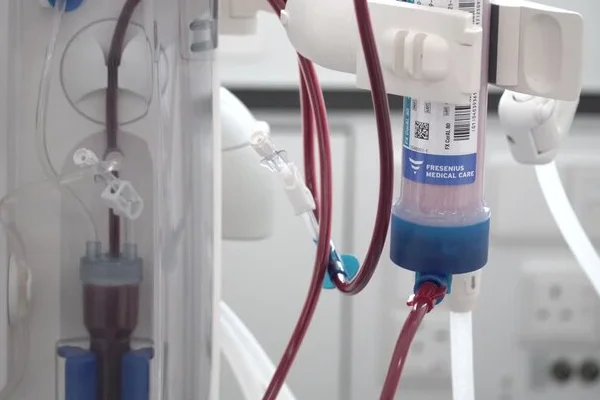
Hemodialysis uses a dialysis machine and a special filter called a dialyzer to remove waste products and excess fluid from the blood.
Blood is circulated through the dialyzer, where unwanted substances and excess fluid are removed, and the filtered blood is returned to the body.
Hemodialysis is commonly performed at a dialysis centre, although home-based treatment may be an option for selected patients depending on medical suitability and local availability.
Peritoneal dialysis uses the lining of the abdomen, called the peritoneum, as a natural filtering membrane. A dialysis solution is introduced into the abdominal cavity through a catheter.
Waste products and excess fluid move into the dialysis solution, which is then drained and replaced according to the prescribed dialysis schedule.
Patients who are expected to require long-term hemodialysis may need preparation of vascular access. Vascular access provides a reliable route for blood to travel between the body and dialysis machine.
Possible forms of access include an arteriovenous fistula, arteriovenous graft, or dialysis catheter, depending on the clinical situation.
The appropriate access is selected according to the patient's condition and dialysis requirements.
Acute kidney injury can cause a sudden reduction in kidney function. In some severe cases, dialysis may be required to manage complications while the underlying cause is treated.
Dialysis in acute kidney injury may be temporary. If kidney function improves sufficiently, dialysis can sometimes be discontinued. The course of recovery depends on the cause and severity of the kidney injury and the patient's overall health.
Patients with advanced chronic kidney disease may eventually require kidney replacement therapy when kidney function becomes severely reduced and complications can no longer be adequately managed with conservative medical treatment.
Regular nephrology monitoring helps determine when dialysis or another kidney replacement option should be discussed.
For suitable patients, kidney transplantation may also be considered as a kidney replacement option.
During hemodialysis, blood is removed from the body through the dialysis access and passed through a dialyzer. The dialyzer filters waste products and excess fluid before the blood returns to the body.
The dialysis team monitors parameters such as blood pressure and the patient's overall condition during treatment.
The duration and frequency of dialysis depend on the patient's medical needs and the dialysis prescription provided by the nephrologist.
Regular monitoring is an important part of dialysis care. Depending on the patient's condition, follow-up may include:
The dialysis prescription may be adjusted according to laboratory findings, symptoms, fluid balance, and other clinical factors.
People receiving dialysis may require individualized dietary and fluid guidance. Depending on kidney function and laboratory results, recommendations may involve sodium, potassium, phosphorus, protein, and fluid intake.
The appropriate diet differs between patients. Dietary restrictions should therefore be based on professional assessment rather than generalized advice.
Patients should follow the fluid and dietary recommendations provided by their nephrologist or renal dietitian.
Dialysis is an important treatment for kidney failure, but patients may experience certain complications. These can vary depending on the type of dialysis and individual health.
During hemodialysis, some patients may experience low blood pressure, muscle cramps, fatigue, headache, or other symptoms. Problems related to vascular access can also occur.
Peritoneal dialysis carries risks such as infection around the catheter or within the abdominal cavity.
Regular monitoring and timely reporting of symptoms can help the medical team identify and manage complications.
For patients undergoing hemodialysis, maintaining healthy vascular access is essential. Patients may be advised to observe the access site for changes such as redness, swelling, pain, drainage, or other unusual findings.
The dialysis team regularly assesses access function. Any sudden change in access performance should be reported promptly.
Dialysis and kidney transplantation are different approaches to kidney replacement therapy. Some patients remain on dialysis for an extended period, while others may undergo transplant evaluation if they are medically suitable.
A kidney transplant may reduce or eliminate the need for dialysis if transplantation is successful. However, transplantation requires comprehensive evaluation and lifelong medical follow-up.
The appropriate treatment pathway is determined according to the patient's health, kidney function, transplant suitability, and other clinical factors.
Dr. Tarun Kaushik provides nephrology consultation and medical guidance for patients requiring evaluation for dialysis and kidney replacement therapy in Noida.
Dialysis planning involves more than simply determining whether kidney function is reduced. A nephrologist assesses symptoms, laboratory findings, fluid balance, associated medical conditions, medications, and the overall progression of kidney disease.
An individualized approach can help determine whether dialysis is required, what type of kidney replacement therapy may be appropriate, and how the patient's condition should be monitored over time.
A nephrology consultation may be appropriate if kidney function has declined significantly, dialysis has been recommended, there is persistent fluid overload, or laboratory tests show complications associated with advanced kidney disease.
Patients already receiving dialysis may also require regular nephrology follow-up to monitor treatment, kidney function, blood pressure, electrolytes, nutrition, and vascular access.
Dialysis in Noida provides an important kidney replacement therapy for people whose kidneys cannot adequately remove waste products and excess fluid. Depending on the clinical situation, dialysis may be required temporarily in acute kidney injury or as long-term treatment for advanced chronic kidney disease.
With nephrology evaluation by Dr. Tarun Kaushik, patients can receive individualized assessment and guidance regarding dialysis, monitoring, complications, and other kidney replacement options. Regular medical follow-up remains an important part of safe and effective dialysis care.
Dialysis helps remove waste products and excess fluid from the blood when the kidneys are unable to perform these functions adequately.
No. Most people with kidney disease do not immediately require dialysis. The decision depends on kidney function, symptoms, complications, fluid balance, laboratory results, and the overall clinical condition.
The two main types are hemodialysis and peritoneal dialysis. The appropriate option depends on the patient's medical condition and individual circumstances.
Yes. In some cases of severe acute kidney injury, dialysis may be required temporarily while the kidneys recover. Whether dialysis can be stopped depends on recovery of kidney function and the underlying cause.
Some dialysis patients may be suitable for kidney transplantation. Eligibility requires a detailed assessment by a transplant team, and donor availability and other factors also play a role.
The frequency depends on the type of dialysis and the patient's individual medical requirements. A nephrologist determines the appropriate dialysis schedule based on kidney function, fluid status, laboratory findings, and overall health.


